All the Buzz at Seminole
Alexa Heinrich | 4/22/2026
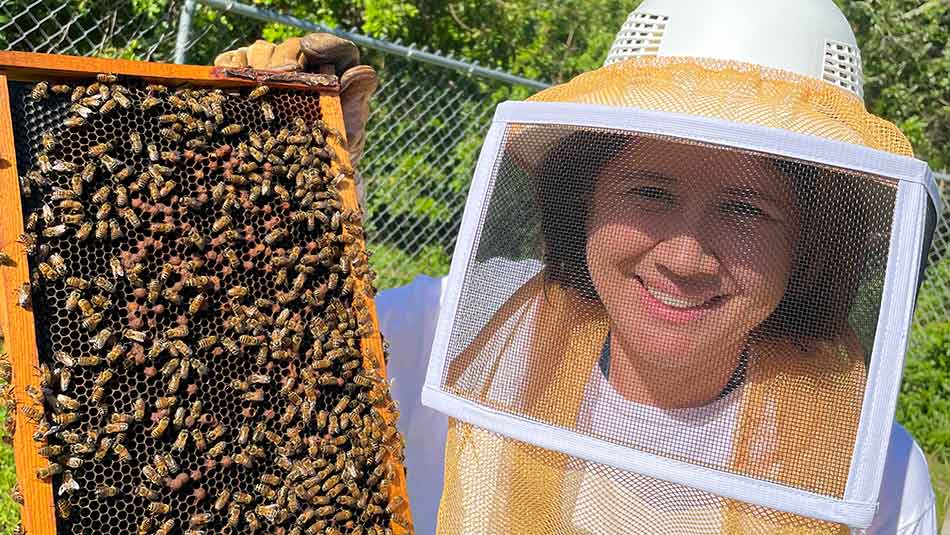
Natural Science Professor Maura Scanlon holds a frame of bees at the Seminole Campus
St. Petersburg College’s Seminole Campus is beautiful and known in the community for its nature-friendly features.
Small retention ponds border the east side of the campus and are home to a number of different birds, fish, reptiles and amphibians. Behind the UP building sits the Natural Habitat Park and Environmental Center, a 40-acre spread filled with nearly 300 known species of animals and insects as well as a plethora of trees and flowers native to Florida.
The campus even has several large solar panels located along one of its retention ponds to help generate renewable energy.
But a hidden treasure at Seminole is the campus’ very own apiary in the northwest area of the Natural Habitat Park. A passion project turned teaching tool started by Professor Maura Scanlon, Ph.D., the apiary was created in partnership with the Pinellas Beekeepers Association (PBA) in 2015. Not only does the buzzing sanctuary serve an academic purpose for students and community members, but it also helps ongoing efforts to save the bees.
Protect the Pollinators
“Save the bees” has been a common mantra among people concerned about the declining population of pollinators ever since beekeepers first reported unusually high losses in their hives in late 2006.
This phenomenon, known as Colony Collapse Disorder (CCD), “occurs when the majority of worker bees in a colony disappear and leave behind a queen, plenty of food and a few nurse bees to care for the remaining immature bees and the queen,” according to the U.S. Environmental Protection Agency (EPA).
While some may think that fewer bees just mean fewer bee stings, CCD affects the environment and major food sources because bees are responsible for pollinating most of the fruits, vegetables, seeds and nuts consumed by the global population.
Pollinators and beekeeping also have a huge impact on the economy. The University of Florida’s Food and Resource Economics Department shared in a 2020 report that “total revenues for Florida beekeeping operations were estimated at $93.36 million, including $60.35 million for sales of honeybee products and $33.29 million for crop pollination services.”
It’s safe to say that everyone would be feeling the sting if bee populations continue to decline or disappear completely.
Seminole’s Teaching Apiary
So, what part does the bee apiary at the Seminole Campus play in all this? Well, like most things at St. Petersburg College, it all comes back to education.
Once a month, the Pinellas Beekeepers Association hosts a hands-on training session at the Seminole Campus apiary that allows PBA members and non-members to learn more about bees. Participants also get the opportunity to go through a hive, and they are provided a beekeeping hat and veil if they need one. There are several bee boxes at the apiary to observe.
Professor Scanlon also uses the apiary to educate her students at SPC. While she doesn’t normally take classes out to the apiary, she does bring bees into the classroom with a demonstration hive and lectures about the importance of pollinators.
"They’re very interesting creatures, I can study them right here on campus without expensive gear, and I can bring the experience to my students. I'm working on a biology special topics course that may be held in the next few years for biology majors. Students would know ahead of time and consent to being near and working with bees to learn about them and beekeeping.”
Scanlon is also a member of the PBA Board and helps coordinate the club’s monthly meeting. She has become a Master Beekeeper through the University of Florida’s rigorous five-year certification program and has even inspired some of her students to become beekeepers.
“I think it’s very important to educate the public about pollinators and all the things that bees do for us,” Scanlon said when interviewed by ABC Action News in May 2023. “It gives everybody an opportunity to kind of try out the hobby before they dive right into it.”

 Illustration by Rhys Conner